
Level up your work by keeping things simple

Modern life often pushes us to do more than one thing at a time. We answer emails while thinking about dinner, switch between tasks at work, and try to keep up with constant demands. Multitasking has almost become a badge of productivity.
But research suggests something surprising: what we call “multitasking” is really just rapid task-switching.
Each time we switch tasks, the brain doesn’t simply continue smoothly. It has to reset. It shifts attention, reorients to the new task, and filters out what’s no longer relevant. That reset may feel small in the moment, but it adds up.
Researchers describe this as a task-switch cost. Every switch makes us slightly slower and slightly less accurate. Over time, this can lead to longer work times and more mistakes.
Brain imaging studies show this as well. When people switch tasks, areas of the brain involved in attention and control become more active. In other words, the brain is working harder just to keep up.
So instead of doing many things at once, we’re constantly starting and stopping different thought processes, and that takes energy. This is why multitasking often feels exhausting. It’s not just the amount of work, but the constant switching.
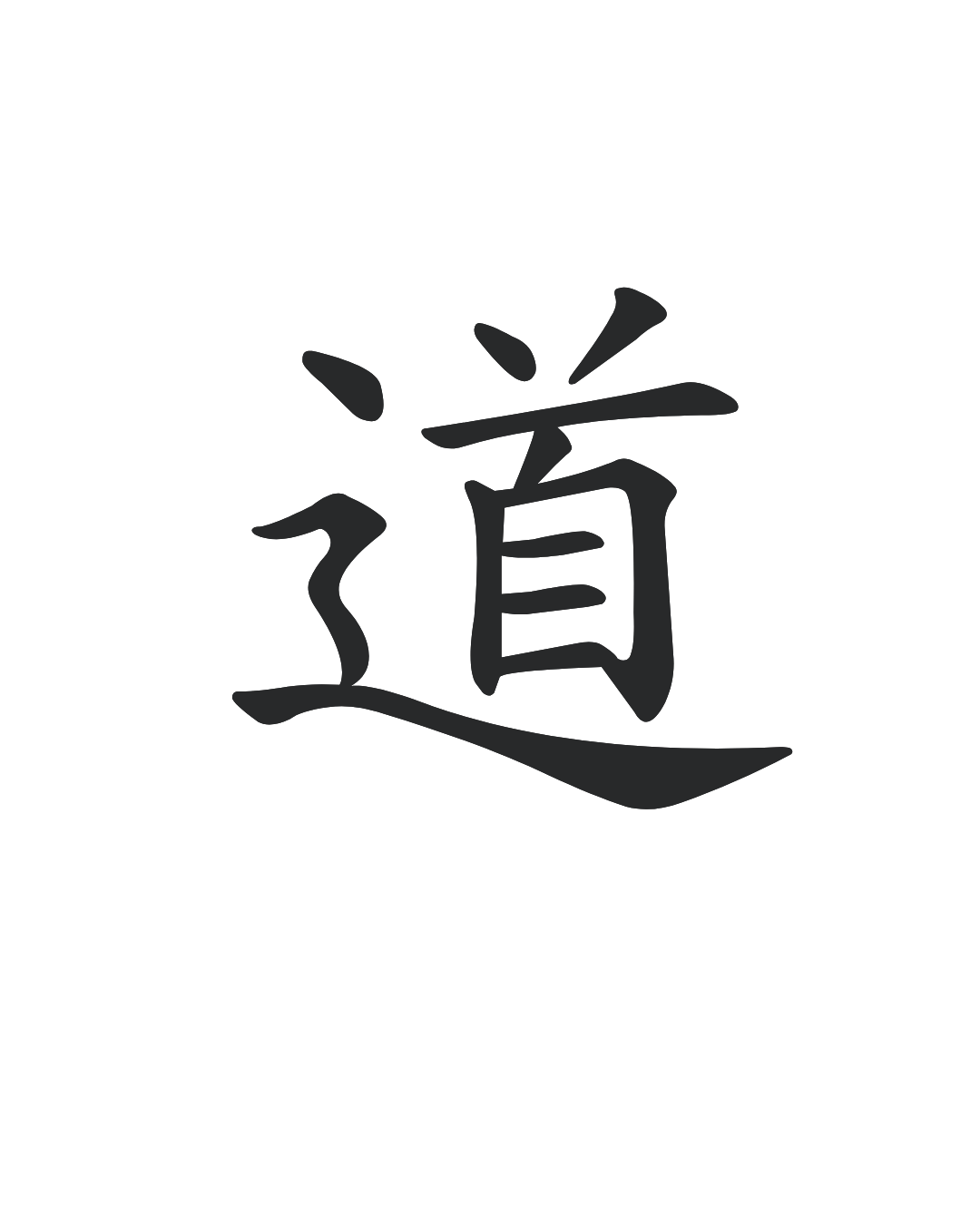
Chinese character, “Tao”
Interestingly, this modern research echoes ideas that have existed for centuries. The Tao Te Ching, for example, emphasizes simplicity and focused attention, suggesting that clarity comes from doing less, not more.
This idea connects closely to a concept from Taoist philosophy called Wu Wei.
Wu Wei is often translated as “non-action,” but it doesn’t mean doing nothing. It means not forcing things unnecessarily, moving with life instead of constantly pushing against it.
In terms of attention and productivity, Wu Wei can be understood as mental simplicity. Instead of scattering your focus, you work with one clear intention at a time. You do what needs to be done without overloading the mind.
When we try to multitask, we force the mind into constant switching. Attention gets split, focus is interrupted, and mental friction increases. Wu Wei suggests the opposite: reduce resistance. Let each task have space. Let attention settle instead of fragmenting.
In practice, this might mean focusing on one task fully before moving to the next, slowing down just enough to stay present, and reducing unnecessary mental noise.
The result isn’t less productivity. It’s often more clarity, more consistency, and less fatigue. When we focus on one thing at a time, work tends to move more smoothly. There’s less stopping and starting, and more steady progress.
In the end, simplicity isn’t about doing less work. It’s about doing work with less friction.
References
Madore, K. P., & Wagner, A. D. (2019). Multicosts of Multitasking. Cerebrum: The Dana Forum on Brain Science, 2019, cer-04-19. https://pmc.ncbi.nlm.nih.gov/articles/PMC7075496/
Tzu, L. (n.d.). Tao Teh Ching (J. Wu, Trans.) [Review of Tao Teh Ching]. Shambhala.
